What Is Single Origin Coffee?
Coffee menus are full of origin names, farm details, and tasting notes. But without context, single origin coffee can feel like another vague specialty coffee term.
Coffee from a clearly defined source may come from a country, region, farm, cooperative, or microlot. The main point is traceability. Instead of blending beans from several places, single-source coffee keeps the focus on where the coffee comes from and how that place shapes flavour.
For coffee roasters, this term matters because it affects more than product description. It can shape green coffee buying, roast development, flavour communication, seasonal releases, and how each coffee fits into a wider product range.
What Does Single Origin Coffee Mean?
Single origin coffee is coffee from one defined source. That source can be broad or very specific. A coffee labelled as Ethiopia or Colombia is still single origin, but the origin is country-level.
A more specific example may name a region, such as Huila in Colombia or Yirgacheffe in Ethiopia. A more detailed one may name a farm, cooperative, washing station, or microlot.
This is why single origin coffee does not always mean the same level of detail. One roaster may use the term for coffee from one country. Another may use it only when the coffee can be traced to a specific producer or small lot.
The value is not just the word “single.” The value is clarity. When the source is clear, the coffee is easier to understand. The roaster can connect origin, variety, processing method, altitude, and flavour in a more focused way.
This does not mean coffee from one defined source is always better than other coffee. It only means the coffee has a more defined source. Quality still depends on farming, processing, storage, roasting, and brewing.
In specialty coffee, this level of detail matters because quality is often discussed through scoring and sensory evaluation. The International Coffee Organization notes that Q-grading standards are designed to distinguish specialty coffee at a Q-score of 80. This does not mean all coffee from one defined source is specialty grade, but it helps explain why origin, variety, process, and flavour profile receive so much attention in this market.
Single Origin Coffee vs Blends: What Is the Difference?
The main difference is how the coffee is sourced and built. Single origin coffee focuses on one clear source. A blend combines coffees from different sources to create a planned flavour profile.
That difference changes the purpose of the coffee.
- Single origin coffeeoften highlights origin character, seasonality, processing method, and distinct flavour.
- Blendsoften focus on balance, consistency, body, and repeatable taste.
- Single origin coffeemay change from harvest to harvest.
- Blendscan be adjusted over time to keep a similar taste.
- Single origin coffeeworks well when a roaster wants to show a specific coffee clearly.
- Blendswork well for house coffees, espresso blends, and daily menu staples.
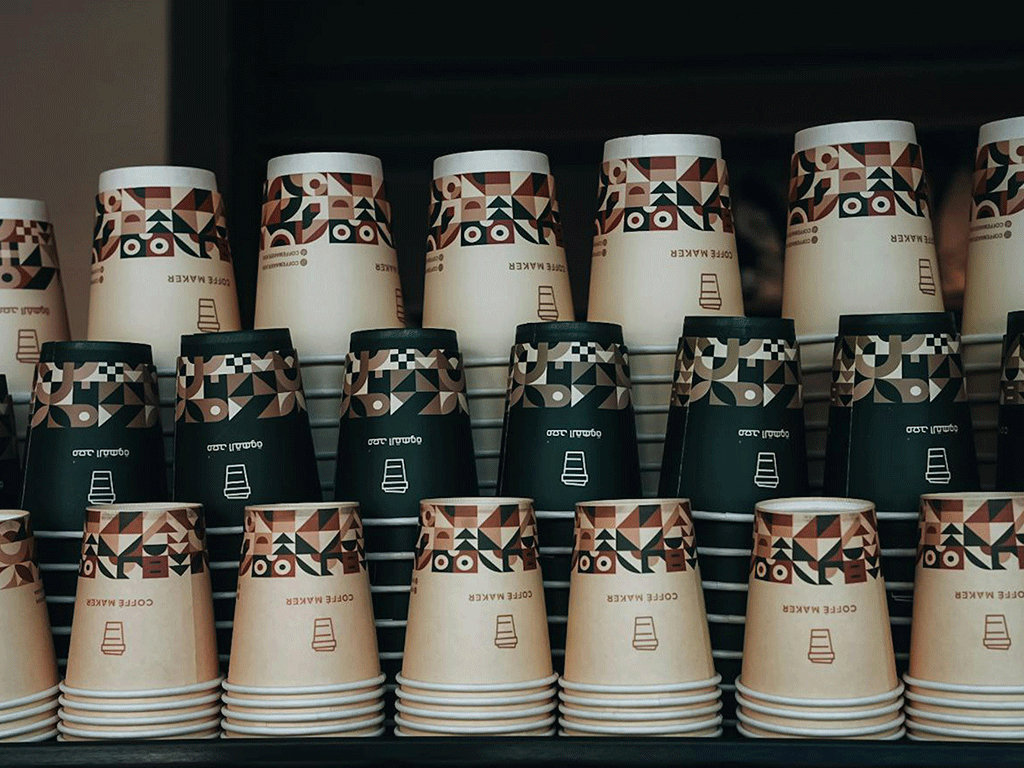
Neither one is automatically better. They simply serve different goals.
An origin-specific coffee can be useful when the roaster wants customers to notice a clear difference between coffees. One may be floral and tea-like. Another may be sweet, round, and chocolatey. Another may be fruit-forward because of its processing method.
A blend is useful when the roaster wants a coffee to stay stable. This matters for espresso, milk drinks, wholesale accounts, and customers who want the same cup again and again.
For roasters, the choice is not just about taste. It is about product purpose. A single origin coffee can show variety and origin character. A blend can give structure and consistency. A strong coffee menu often uses both, because they answer different customer needs.
Why Do Coffee Roasters Choose Single Origin Coffee?
Coffee roasters often choose single origin coffee because it gives each coffee a clearer identity. It is not only “medium roast” or “house coffee.” It has a source, a process, a variety, and a flavour direction.
This helps roasters build a more interesting product range. One coffee may be bright and citrus-like. Another may be deep and chocolatey. Another may taste fruitier or sweeter because of its processing method.
This type of coffee also works well for seasonal releases. Green coffee changes with harvest cycles, availability, and quality. Roasters can use these changes to refresh their menu throughout the year.
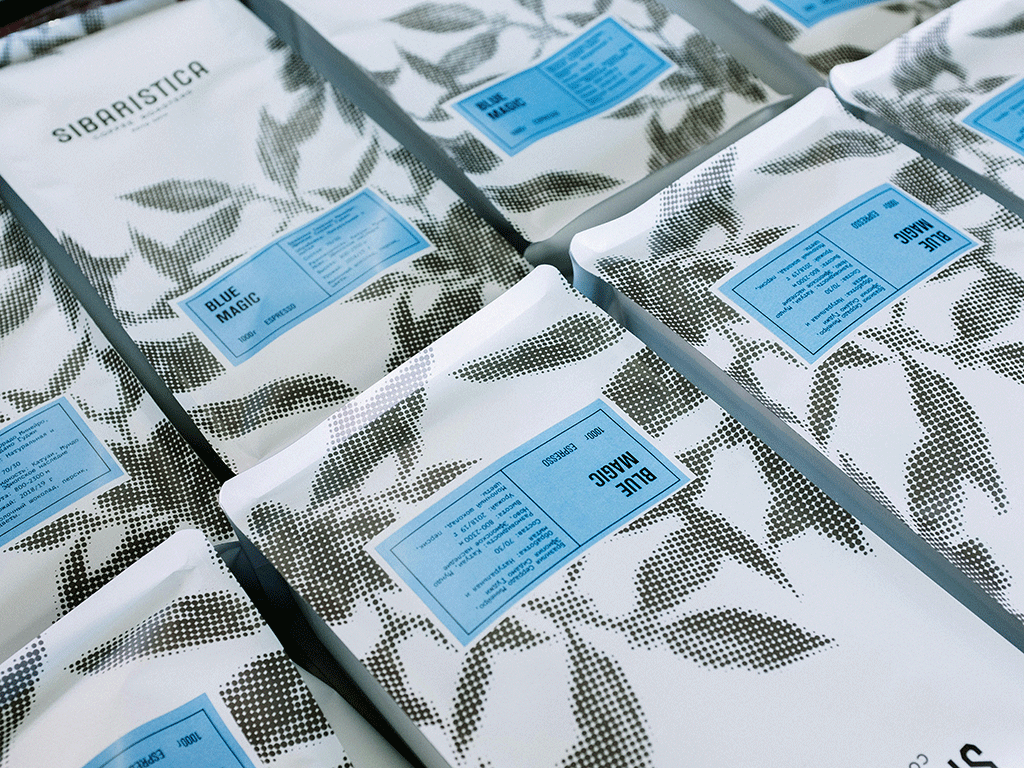
The growing interest in specialty coffee also supports this. In 2025, the National Coffee Association reported that 46% of American adults had specialty coffee in the past day, up 84% since 2011.
For roasters, this means there is more space for coffees with clear origin stories and specific flavour profiles. Customers may not know every farm name, but they can learn to compare origins, processing methods, and flavour notes over time.
Still, this offering needs careful planning. Roasters have to consider green coffee supply, price, roast development, flavour clarity, and customer acceptance. A coffee can be traceable and distinctive, but it still needs to fit the market.
At YamiPak Coffee, we help coffee roasters create custom coffee bags, labels, and boxes for single origin coffee. Origin, process, roast profile, flavour notes, and brewing suggestions can be arranged clearly without making the design feel crowded.
Contact the YamiPak Coffee team to discuss custom packaging for your single origin coffee range.
FAQ
What does single origin coffee mean?
It means coffee from one defined source, such as a country, region, farm, cooperative, or microlot.
Is single origin coffee better than blends?
Not always. It highlights origin character, while blends often offer balance, consistency, and a repeatable flavour profile.
Is it the same as specialty coffee?
No. Single origin coffee describes source. Specialty coffee refers more to quality, scoring, and sensory standards.
Share This Story, Choose Your Platform!

Chris Li
Chris Li is the Marketing Director at YamiPak coffee, with over 10 years of experience in packaging and printing. Passionate about sustainable solutions and innovative design, Chris helps brands create impactful packaging that leaves a lasting impression.