EU Coffee Packaging Regulations for Coffee Roasters
EU coffee packaging regulations can turn a good-looking coffee bag into a business risk. If the label, structure, or proof is weak, a roaster can lose time, money, and market access.
EU coffee packaging regulations now push roasters to look past design alone. Coffee still needs clear food information and safe food-contact materials, and the PPWR adds stronger rules on recyclability, labelling, and recycled plastic use over the next few years.
This matters even if your current bags work well today. The next step is not a full redesign overnight. It is to understand what is changing, what it means for daily packaging work, and what to check with suppliers now.
What Is Changing in EU Coffee Packaging Regulations
Coffee packaging regulations in Europe are no longer only about basic food safety and label text. They now cover more issues, including recyclability, clearer disposal guidance, and better proof behind packaging claims.
The older rules still matter. Food information law still sets the base for what appears on pack, and food-contact rules still require packaging materials not to affect food in an unsafe or unacceptable way. Whole bean and ground coffee also remain exempt from mandatory nutrition panels.
The bigger change comes from the Packaging and Packaging Waste Regulation, or PPWR. It entered into force on 11 February 2025 and will apply from 12 August 2026. The EU wants less packaging waste, more recycled plastic, and all packaging to be recyclable by 2030.
The pressure behind these rules is easy to see in the data. In 2023, the EU generated 79.7 million tonnes of packaging waste, or 177.8 kilograms per person. This is one reason coffee packaging regulations now focus on the full packaging system, not only one material.
For coffee roasters, this shifts the conversation. Many teams used to focus on shelf impact, barrier performance, and print finish first. Those points still matter, but more attention is now being pushed toward recyclability, labelling, waste reduction, and compliance records.
How These Regulations Affect Coffee Roasters
The next question is practical. How do coffee packaging regulations change the daily work of a coffee roaster that already has bags, labels, and suppliers in place?
First, packaging approval gets more detailed. Roasters now have to ask not only whether a bag protects coffee well, but also whether its structure is easy to explain, whether disposal guidance is clear, and whether suppliers can support on-pack claims with the right documents.
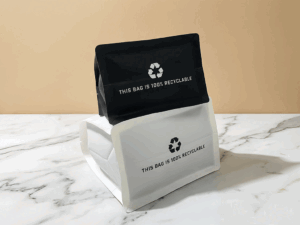
Second, the development cycle can get longer. As rules become more specific, teams spend more time checking material structures, artwork wording, declarations, and market fit before printing at scale. This matters even more when one coffee line is sold across more than one market.
The EU rules and the UK rules do not work in the same way, so one packaging decision can lead to two compliance checks. Third, broad green claims lose value. Words like “eco-friendly” or “sustainable” say little on their own.
If a roaster cannot explain what the bag is made from or how it should be handled after use, the message gets weak fast. UK sales can add another layer. The UK is outside the EU, so PPWR is not the same rule there. But UK packaging EPR still matters.
Affected organisations may need to report packaging data, register, and pay fees. For roasters selling into both markets, the real challenge is building better packaging data across both systems.
The policy push is also real, not symbolic. Eurostat says the EU reached an overall packaging recycling rate of 67.5% in 2023, already close to the 2030 target of 70%. Coffee packaging regulations are moving toward measured outcomes, not just good intentions.
How Coffee Roasters Can Adapt to Coffee Packaging Regulations
Most roasters do not need to replace every coffee bag at once. But they do need a better process for reviewing current packaging and future orders.
Start with a packaging audit. List each bag type, label, finish, valve, and target market. Then check what each pack claims, what documents support it, and whether the disposal message still makes sense.
After that, review material structure and supplier documents. Ask for a clear structure description, food-contact paperwork, and support for any recycling or recycled-content claim. Coffee packaging regulations now reward simple, well-supported answers.
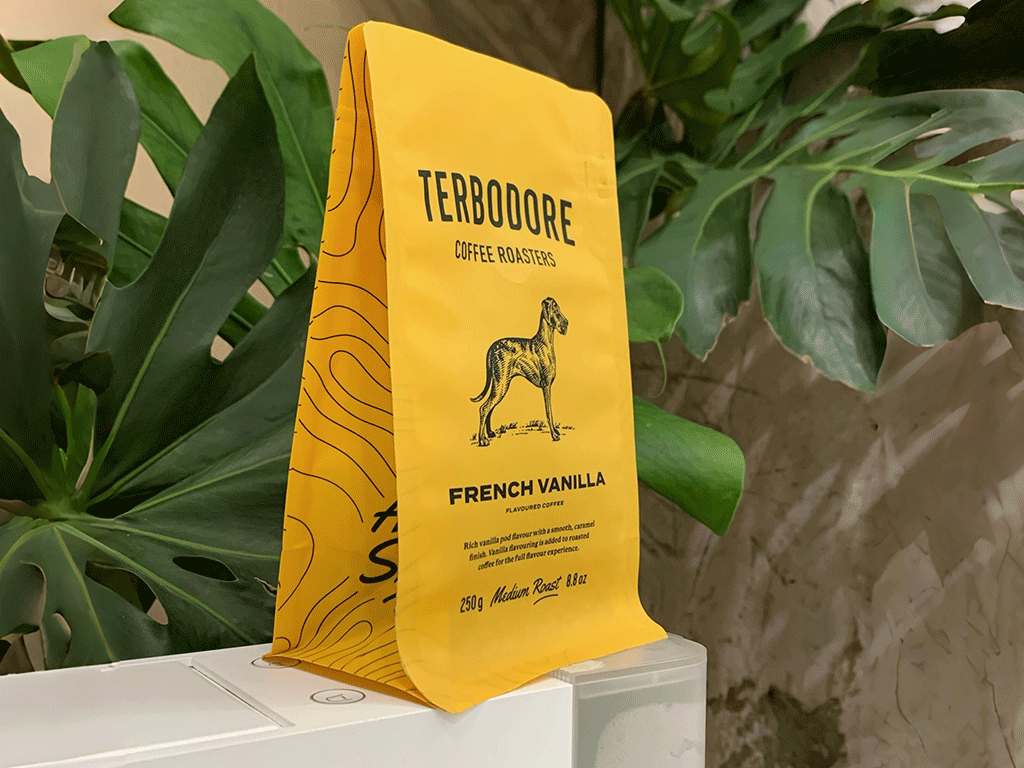
Then review pack language. Remove vague wording where possible. Use clear material and disposal information when you can support it.
It also helps to separate EU needs from UK needs early. A bag may look the same in both markets, but the compliance work behind it can differ.
Next, move compliance checks earlier in the workflow. Add them to supplier discussions, sample reviews, and final sign-off, not only at the artwork stage.
It is also smart to work backwards from the timeline. The PPWR applies from 12 August 2026, and the EU goal is recyclability by 2030.
At YamiPak Coffee, we keep these packaging concerns in view when supporting coffee roasters. We focus on practical packaging support, with attention to material structure, food-contact requirements, labelling clarity, and the documentation needed to back packaging decisions.
Coffee packaging regulations are becoming more detailed, but with the right packaging support, roasters can respond without giving up quality, function, or brand presentation.
Contact the YamiPak Coffee team to learn more about our compliant, sustainable coffee packaging solutions.
FAQ
What labelling is required on coffee bags under current EU regulations?
Coffee bags need core food information such as the product name, net quantity, date, and operator details. Whole bean and ground coffee usually do not need a nutrition declaration.
What do the PPWR rules mean for coffee bags?
From 12 August 2026, the PPWR starts to apply. It pushes coffee packaging toward clearer labels and recyclable packaging, with the EU target set for 2030.
What’s the best way to ensure your coffee packaging is compliant?
Audit every pack, verify supplier documents, confirm food-contact safety, and match claims and disposal guidance to each market before you scale production.
Share This Story, Choose Your Platform!

Chris Li
Chris Li is the Marketing Director at YamiPak coffee, with over 10 years of experience in packaging and printing. Passionate about sustainable solutions and innovative design, Chris helps brands create impactful packaging that leaves a lasting impression.