
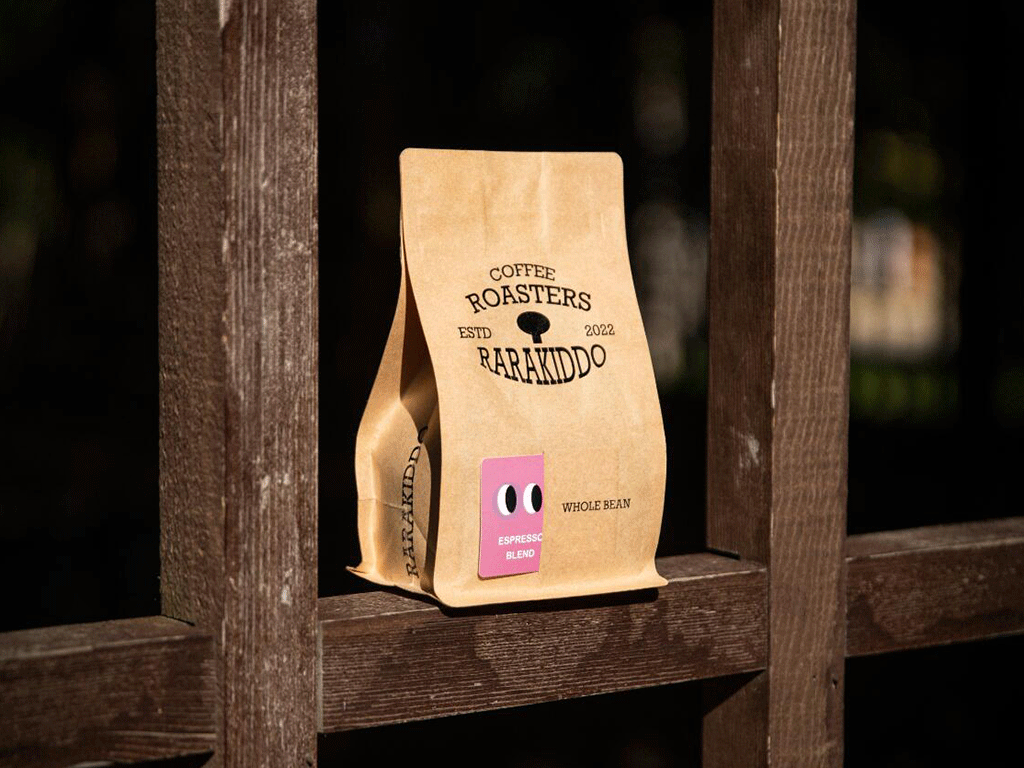
What Roasters Should Know About Compostable Coffee Packaging
Plastic coffee packaging is convenient, but it has also helped drive decades of waste that often ends up in landfill or the ocean. Customers now notice what your bag is made of before they taste the coffee, and “eco” claims get questioned fast. Compostable coffee packaging can close that gap—if it’s chosen and explained correctly.
Compostable coffee packaging uses certified materials that can break down in composting conditions, most often in industrial facilities with controlled heat and humidity. Roasters should choose certified structures, keep film, valve, inks, and adhesives compatible, and maintain barrier performance for freshness. Disposal instructions should match local compost access.
What Is Compostable Coffee Packaging?
Compostable coffee packaging refers to packs made from materials that can break down in a composting environment. The end products are CO2, water, and biomass. Harmful residues should not remain. This is not the same as “biodegradable.” Biodegradable only means a material can break down over time. It does not guarantee a clean end result. It also does not guarantee a practical timeframe. Compost quality is not assured either.
Compostability standards make the claim measurable. EN 13432 requires disintegration during composting. A common test checks 90% passing a 2 mm sieve after 12 weeks. It also requires at least 90% biodegradation within six months. These tests use controlled industrial composting conditions. ASTM D6400 covers compostable plastics for industrial composting. It is often described using targets such as 90% conversion of organic carbon to CO2 within 180 days. It also includes limits on heavy metals. Ecotoxicity checks are included as well.
For roasters, the whole pack matters. A certified outer paper does not solve everything. The inner barrier film also matters. Inks, adhesives, and labels matter too. The degassing valve must follow the same compost route. You should also separate industrial compostable from home compostable. They do not behave the same. Many certified materials need industrial composting to perform as tested. Disposal instructions should match real compost options in your market.
Compostable Materials Used in Coffee Bags
Most compostable coffee packaging uses a paper outer layer. It adds stiffness and supports print quality. A compostable inner layer is usually added. That inner layer supports heat sealing and barrier protection. Kraft paper helps branding. But it does not block oxygen and moisture well enough. It usually needs a lining or a coating.
For the inner layer, converters often use bio-based polymers. PLA is a common option. PLA is produced from fermented plant sugars. It can be made into films or coatings. PLA tends to break down reliably in industrial composting conditions. Temperature, airflow, and moisture are kept consistent there. Researchers note that compostability outcomes depend on these conditions. Standards also focus on physical disintegration. They also measure mineralization within defined time windows.
To improve flexibility and sealing, PLA is often blended. PBAT is a common blend partner. Some structures also use cellulose-based films. These can support transparency and a clean look. Cellulose films can be certified compostable. But barrier performance still needs to be verified. Roasted coffee is sensitive to oxygen and moisture. Both factors drive staling.
Barrier chemistry is where most progress happens. Water-based coatings are being tested widely. Compostable barrier layers are also improving. The goal is lower oxygen and moisture transfer. Compatibility with composting must sremain. Small components also matter in compostable coffee packaging. A coffee bag can lose its compostability claim. This happens if the valve is not compatible. It also happens if adhesives or labels are not compatible. Ink systems can cause the same issue. Ask for documentation that covers the final structure. Do not rely on claims for one layer only.
Benefits for Coffee Roasters
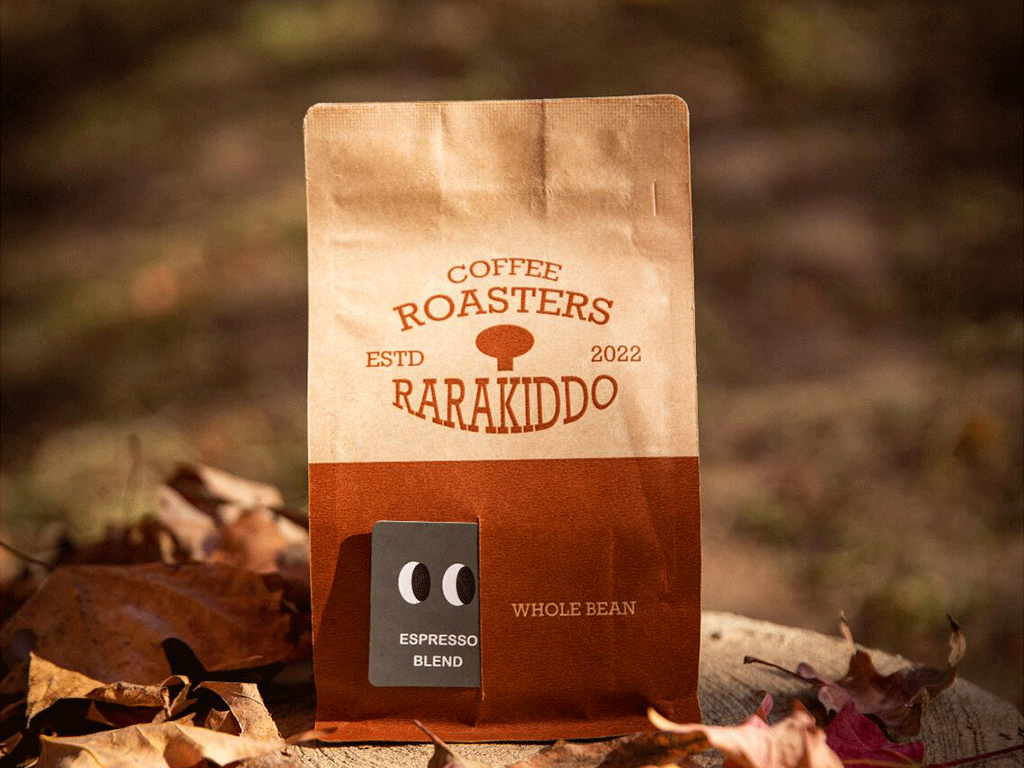
Compostable coffee packaging can strengthen positioning when it is honest, certified, and paired with a freshness-ready structure. On the demand side, shoppers do pay attention. IBM consumer research found that 49% of surveyed consumers said they had paid a premium for products branded as sustainable or socially responsible, with an average premium reported at 59%. PwC reported that consumers are willing to spend an average of 9.7% more on sustainably produced or sourced goods, even as cost-of-living and inflation concerns weigh.
On the product side, a well-built compostable bag can still protect quality. Specialty Coffee Association highlights oxygen as a key driver of staling, and it reports that reducing oxygen to 0.5% in a coffee container can increase shelf life by up to 20 times. That pushes roasters to focus on barrier performance and sealing, not just material claims.
Finally, compost claims can reduce friction in wholesale and cafe channels that already separate organics. When you provide clear disposal instructions and proof of certification, you also make your sustainability story easier to trust and easier to share.
Key Challenges in Compostable Coffee Packaging for Roasters
Freshness sits at the top of the list. Coffee reacts quickly with oxygen, and compostable structures can struggle to match foil laminates on oxygen and moisture barrier. The SCA notes that lowering oxygen can dramatically extend shelf life, which shows how sensitive roasted coffee is to packaging performance. Roasters who ship long distances or sell through retail need to test real shelf life, not assume a “green” material will hold quality.
Claims and disposal create the second problem. EN 13432 and ASTM D6400 are tied to industrial composting tests, but many customers do not have easy access to commercial composting, and “home compostable” is a different claim. Labels also vary by region. In California, “compostable” labeling is regulated and tied to meeting ASTM standards and other requirements, so roasters should keep compliance in mind.
YamiPak Coffee helps roasters choose a compostable coffee packaging structure that fits the product, channel, and target shelf life. We review barrier needs, recommend certified material combinations, and keep components consistent, including valves, inks, and adhesives.
We also make execution practical. You get low MOQs, fast samples, and artwork checks that protect seals and valve placement. If your team needs proof for a product page, we can share the relevant certificates for the selected structure and help you write clear disposal guidance.
Share This Story, Choose Your Platform!

Chris Li
Chris Li is the Marketing Director at YamiPak coffee, with over 10 years of experience in packaging and printing. Passionate about sustainable solutions and innovative design, Chris helps brands create impactful packaging that leaves a lasting impression.
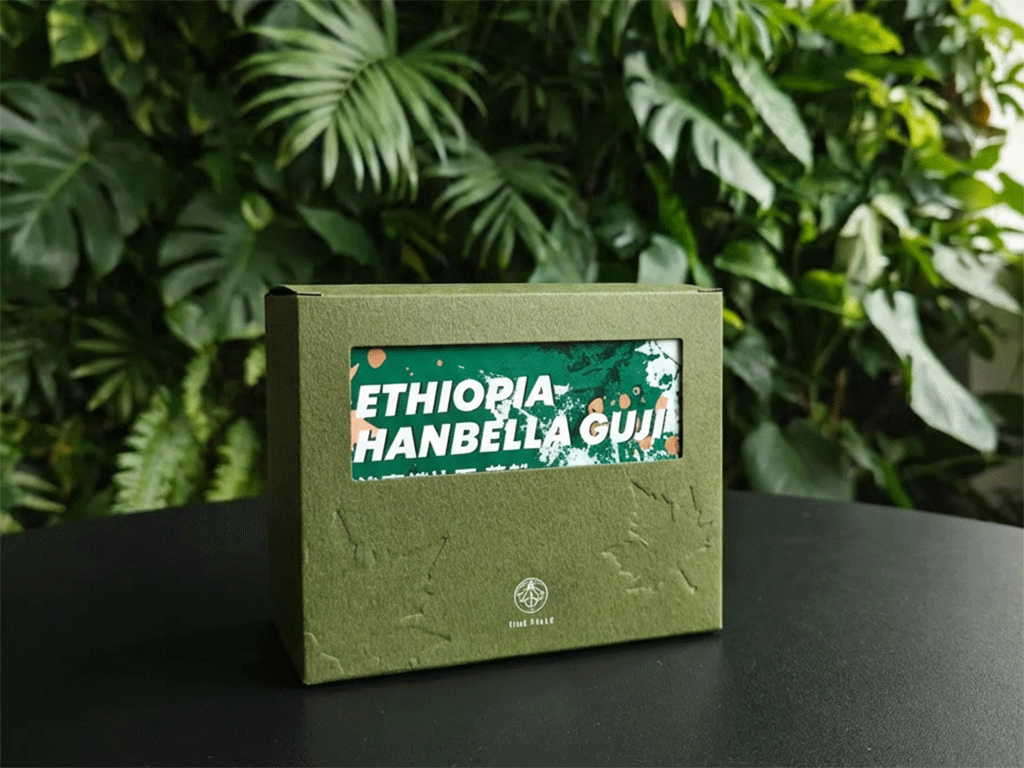 Coffee Box Design with Embossing & Debossing