Biodegradable vs. Recyclable Coffee Packaging
The push for sustainability has never been stronger, especially when it comes to everyday products. In the coffee industry, options like recyclable coffee packaging are gaining attention as businesses seek to reduce waste. With millions of coffee cups and bags filling up landfills, the need for eco-friendly solutions is critical.
Biodegradable vs. Recyclable Coffee Packaging: Which one is better for the environment?
Both biodegradable and recyclable packaging help reduce the environmental impact, but they do so in different ways. Understanding their differences is crucial for making informed decisions that align with sustainability goals.
By choosing the right packaging, coffee businesses can reduce waste, preserve the quality of their products, and contribute to a more sustainable future. However, the decision between biodegradable and recyclable options involves considering a variety of factors.
What is Biodegradable Coffee Packaging?
Biodegradable coffee packaging breaks down naturally and returns to the earth without leaving harmful residues. Typically made from plant-based materials like cornstarch, sugarcane, or wood pulp, many brands market these bags as a greener alternative to traditional plastic packaging.
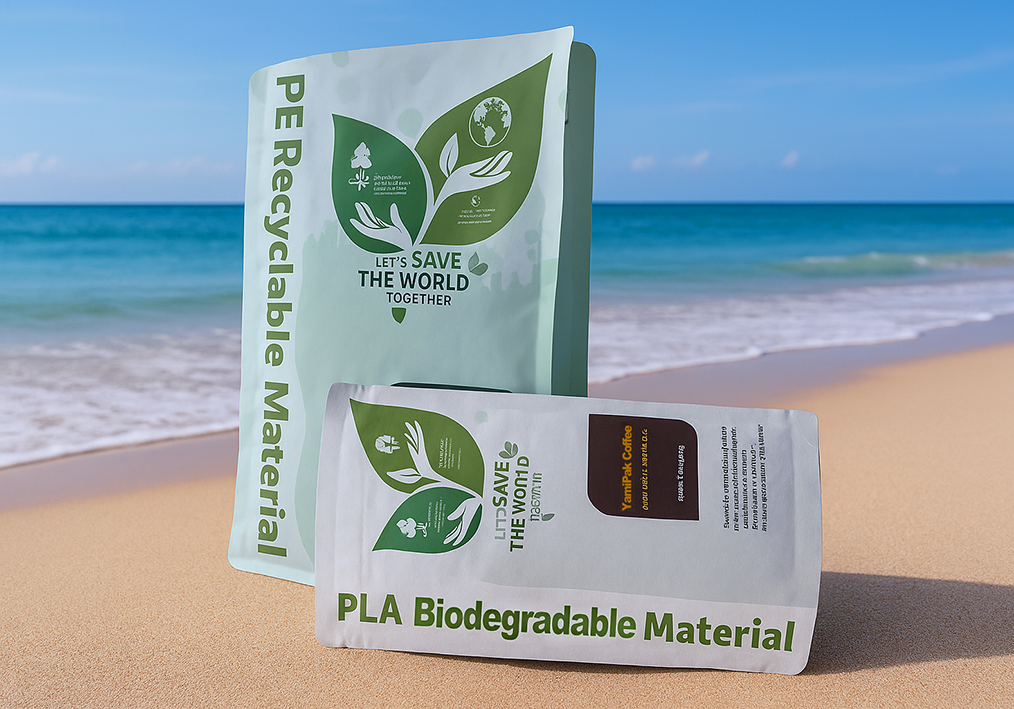
Biodegradable packaging, like PLA bags, composts and turns into non-toxic compounds when it encounters heat, moisture, and microbes. In ideal conditions, biodegradable packaging can enrich the soil, making it an excellent choice for those committed to zero-waste lifestyles.
Dive Deeper:
Biodegradable materials come from renewable resources, which reduces the reliance on fossil fuels and cuts down waste.Recyclable coffee packaging can be made from materials like paper, plastic, aluminum, and other recyclable plastics. However, their effectiveness in natural environments is limited. For biodegradable coffee packaging to decompose properly, it needs specific conditions, like industrial composting facilities, which may not be available everywhere.
One common material for biodegradable coffee packaging is PLA, which is derived from cornstarch. PLA packaging can break down in a composting environment but fails to decompose effectively in landfills. This is because landfills lack the necessary heat and oxygen for proper biodegradation. Consequently, if people don’t dispose of these bags correctly, they might still add to landfill waste.
Another downside is that biodegradable materials often have lower durability compared to conventional plastic. While they might break down more quickly, their resistance to moisture and oxygen is not always ideal for preserving the freshness of coffee over long periods.
What is Recyclable Coffee Packaging?
Recyclable coffee packaging focuses on reusing materials through established recycling programs.Manufacturers create this type of packaging using various materials like paper, polyethylene, aluminum, and other recyclable polymers.
Recyclable coffee bags are processed in local recycling centers and repurposed into new products, reducing the need for raw materials. Common examples include aluminum foil coffee bags, kraft paper bags with a recyclable lining, and polyethylene (PE) bags.
Dive Deeper:
Recycling helps long-term sustainability by cutting waste and saving resources. One of the primary advantages of recyclable packaging is its ability to be processed indefinitely, especially materials like aluminum and polyethylene. For example, aluminum is highly recyclable and requires only 5% of the energy to be recycled compared to producing new aluminum.
However, the effectiveness of recyclable packaging depends heavily on proper disposal and recycling infrastructure. If consumers do not correctly sort or clean the packaging, it may not be processed properly, leading to contamination and waste. Furthermore, materials like multi-layer bags—common in coffee packaging—can be difficult to separate, making recycling less efficient.
While recyclable materials can protect coffee better from external elements like moisture, air, and light, they still require energy for recycling and may not be as eco-friendly as compostable materials in regions without robust recycling systems.
The Pros and Cons of Biodegradable Coffee Packaging
Pros:
-
Breaks down naturally, reducing long-term landfill waste.
-
Made from renewable, plant-based materials, decreasing reliance on fossil fuels.
-
Can enrich soil if composted properly, promoting circular economy practices.
-
Attracts eco-conscious consumers looking for sustainable alternatives.
Cons:
-
Requires specific conditions (e.g., industrial composting) to break down.
-
Less durable, which may compromise the freshness and quality of coffee.
-
More expensive to produce, impacting the cost of coffee packaging.
-
Not readily available in all regions, limiting accessibility.
The Pros and Cons of Recyclable Coffee Packaging
Pros:
-
Can be processed in standard recycling facilities, promoting a circular economy.
-
Stronger protection for coffee, preserving flavor and freshness.
-
More affordable to produce in bulk, making it a cost-effective option.
-
Widely accepted and supported by existing recycling infrastructure in many regions.
Cons:
-
The effectiveness of recycling depends on consumer participation and proper sorting.
-
Some multi-material bags are difficult to recycle due to contamination.
-
Recycling requires energy, and improper recycling leads to environmental harm.
-
May not offer as strong a “green” brand image compared to biodegradable packaging.
Which is More Sustainable: Biodegradable or Recyclable Packaging?
The choice between biodegradable and recyclable coffee packaging ultimately depends on a variety of factors, including local infrastructure, consumer preferences, and sustainability goals. Biodegradable packaging offers an eco-friendly alternative for short-term storage and composting environments, while recyclable packaging provides long-term sustainability when handled correctly.
In areas with robust composting and recycling facilities, a hybrid approach—using both biodegradable and recyclable materials—might be the best solution, offering a balance between coffee preservation and environmental impact.
Ultimately, both biodegradable and recyclable packaging offer unique benefits, and their effectiveness depends on whether people dispose of and process them correctly. Businesses that invest in either option should prioritize consumer education to ensure proper disposal and recycling practices, helping to minimize the environmental footprint.
In conclusion, both biodegradable and recyclable coffee packaging serve important roles in reducing environmental harm. By choosing the right packaging, coffee businesses can help foster a more sustainable future. The key is to assess your region’s recycling capabilities, your consumers’ preferences, and your long-term environmental goals.
FAQs
1. Is biodegradable packaging always better for the environment?
Biodegradable packaging is ideal in composting environments, but it needs specific conditions to break down. Without these, it may not decompose as intended and can still contribute to landfill waste.
2. Can recyclable coffee packaging be recycled anywhere?
Recyclable packaging depends on local recycling programs. Some areas may not have the necessary facilities to process certain materials, and contamination can hinder the recycling process.
3. How long does biodegradable packaging take to decompose?
The material and environment determine how long biodegradable packaging takes to decompose. Under optimal conditions, it can take weeks to months.
4. Can biodegradable packaging be composted at home?
Some biodegradable materials can be composted at home, but many require industrial composting facilities to break down efficiently. Always check the packaging for disposal instructions.
5. Is recyclable packaging more cost-effective than biodegradable?
Generally, recyclable packaging is more affordable to produce in bulk than biodegradable alternatives, making it a cost-effective choice for many businesses.
6. What is hybrid coffee packaging?
Hybrid packaging combines both biodegradable and recyclable materials, offering the benefits of both worlds. It provides coffee protection while minimizing waste.
7. Which type of packaging protects coffee better?
Recyclable packaging tends to offer better protection against moisture, light, and air, ensuring longer freshness and preserving the coffee’s quality over time.
8. Can I use both biodegradable and recyclable packaging?
Yes, some coffee brands opt for a combination of biodegradable and recyclable packaging to balance sustainability with product protection.
Share This Story, Choose Your Platform!

Chris Li
Chris Li is the Marketing Director at YamiPak coffee, with over 10 years of experience in packaging and printing. Passionate about sustainable solutions and innovative design, Chris helps brands create impactful packaging that leaves a lasting impression.