Espresso Roast in Modern Coffee Roasting
Espresso roast appears on many bags and menus, yet the meaning behind this label often changes from one roastery to another.
This term does not refer to a special type of bean; it describes a roast profile designed for short, pressurised extraction, with enough development to increase solubility, sweetness, and body while keeping acidity controlled and stable.
When a team agrees on a clear internal definition of this style, it becomes easier to plan blends, design single origins for the bar, and speak the same language across sales, training, and packaging.
What espresso roast means in the roastery
Many people outside production still treat it as simply “the darker option”. Inside the roastery, the idea needs more detail than that simple contrast.
At the level of the curve, this usually means longer development after first crack, a slightly higher end temperature, and a rate of rise that supports even colour, high solubility, and sweet, dense cups.
How roasters frame espresso roast
In practice, many teams treat this as a working target rather than a fixed colour. They tend to agree on a few key points:
-
It must extract well under pressure in a short time.
-
It must deliver enough body and sweetness for straight shots and milk drinks.
-
It must stay stable across many extractions each day.
To reach those goals, roasters adjust charge temperature, gas application, airflow, and drop temperature. Some aim for a medium profile that preserves origin character. Others lean a bit darker for markets that prefer chocolate notes and low acidity. The core idea stays the same: the curve must support consistent espresso brewing with realistic bar recipes.
Development time and drop decisions
In many setups, this profile uses a slightly longer development-time ratio than a filter curve from the same coffee. This extra phase lets sugars caramelise more and helps break down sharp acids. Roasters watch bean colour, aroma, and rate of rise in the final minutes, trying to avoid tipping or scorching while still moving the coffee past the lighter filter zone.
Drop temperature is another key decision. A higher drop point raises solubility and pushes body, but it also risks roast-driven notes if taken too far. A lower drop keeps more delicate character but may leave the coffee harder to extract under pressure. Each roastery tests these limits on its own equipment, then writes an internal standard that staff can follow and refine over time.
How espresso roast shapes flavour and mouthfeel
From the drinker’s side, this style first appears as taste and texture in the cup. This is where roast decisions and brew reality meet each other every day. A well-planned profile aims for a balance where acidity feels present but not sharp, sweetness anchors the shot, and body carries flavour clearly in both straight espresso and milk drinks.
Acidity, sweetness, and structure
Compared with a lighter curve from the same coffee, this roast usually drops the highest, most pointed acids and pushes deeper sweetness forward. Shots often show chocolate, caramel, nuts, or ripe fruit instead of citrus peel or sharp green notes.
Good execution still keeps some structure. Without any acidity, the shot can feel flat and heavy. With too much, it can feel thin or sour. Roasters adjust development to hold a small, firm spine of acidity under a broad layer of sweetness. This balance is important when the coffee appears in many drink formats and sizes.
Mouthfeel, solubility, and extraction
Mouthfeel is another strong reason to define the profile clearly. With enough development, the cup usually shows a thicker, more syrupy body under pressure and produces crema that blends smoothly into the liquid, supporting a rounded texture.
At the same time, lab and bar tests often show higher extraction yields from this style than from a much lighter profile brewed at the same recipe. The more open bean structure allows water to reach and dissolve flavour compounds faster. This extra solubility gives bar teams a practical range for brew ratio and shot time, so they can keep recipes simple while still reaching a sweet, balanced cup.
When the roast behaves in a predictable way like this, it becomes easier to train new baristas, write basic brew guides, and support wholesale partners who need stable performance from day to day.
Espresso roast across menus and product lines
This is not only a technical profile; it also plays a clear role in how a brand builds its menu and wider product range.
Many teams treat it as the backbone of the menu: it carries signature drinks, shapes the default flavour memory of the brand, and often generates a large share of daily volume.
Role in cafés and bars
On bar, one main profile often sits in the hopper all day. It needs to work in short black coffee and in the full list of milk drinks. This pushes the roast toward reliability and broad appeal. Sharp, experimental flavours are less important here than stability, sweetness, and clear identity.
Some cafés choose a single option all year and change only the blend components behind it. Others build a house profile and rotate a second, more adventurous espresso for guests who want to explore. In both cases, the label on the bag tells staff and customers that this coffee is set up with pressure brewing and high-frequency service in mind.
Role in retail and online ranges
In retail bags and online shops, this style often forms one or more fixed points in the range. For example, a brand might keep:
-
one house option for milk-forward drinks
-
one lighter version that bridges toward filter profiles
Filter-focused coffees then add variety around that core. This structure helps buyers and wholesale partners understand where each product sits. A clear description explains not only roast depth but also intended use, flavour direction, and how the coffee fits with the rest of the line.
When this role is clearly defined in the portfolio, it becomes easier to brief sales teams, write menu copy, and design packaging that supports the same story across all channels.
Linking espresso roast profiles to coffee packaging
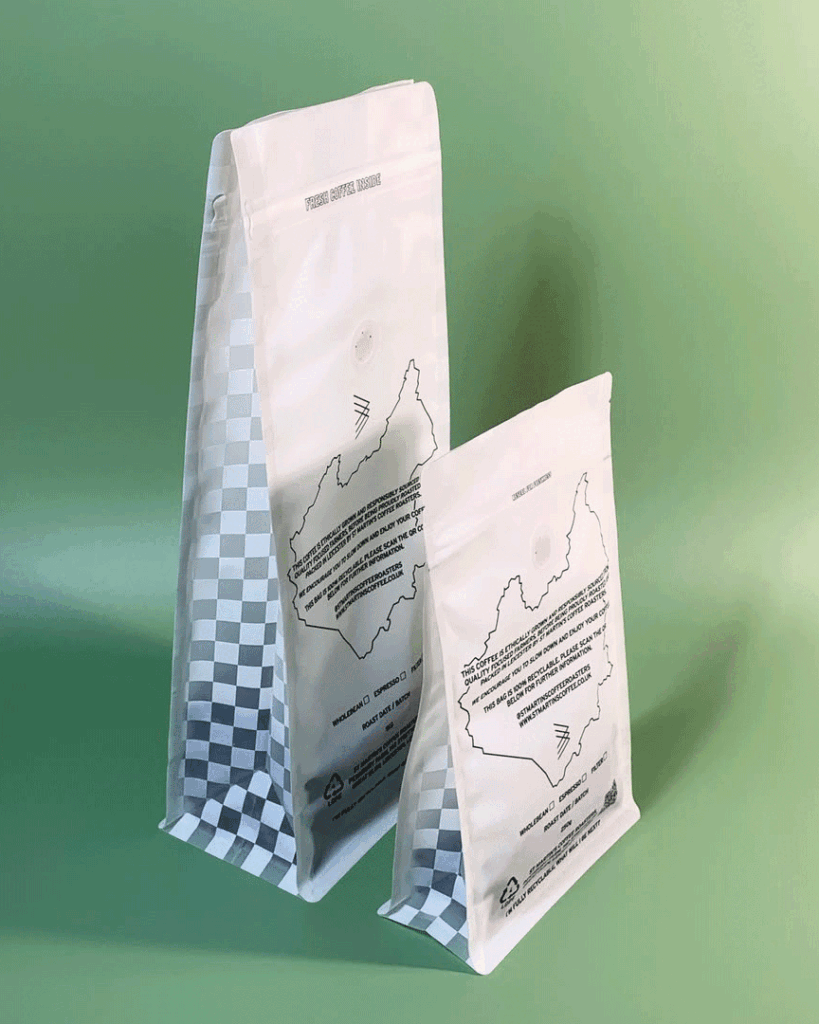
Roast decisions happen in the roastery, but most people first meet an espresso roast on a bag, not at the drum. Clear, honest language on that bag turns a technical profile into a simple promise about how the coffee should perform, which drinks it suits, and what kind of flavour experience buyers can expect.
Short on-pack text, icons, and roast scales give roasting and packaging teams a small space to make this promise readable at a glance. When those details match the curve on the roasting software and the taste in the cup, “espresso roast” stops feeling vague and becomes a clear shared reference across the whole chain.
At YamiPak Coffee, we offer a range of sustainable coffee packaging that will help protect and showcase your coffee at its best. Whether offering coffee for espresso or filter, we can help you choose the perfect coffee pouches and components, from degassing valves to resealable zippers.
With our fully customisable packaging, you can include information on the roast method, roast date, origin, and flavour notes, as well as brewing instructions to help your customers make the most of their coffee.
THINK COFFEE BAG, THINK YAMIPAK
Key takeaways
-
Compared with a lighter profile from the same coffee, development usually runs a bit longer after first crack and finishes at a higher end temperature to support solubility, sweetness, and stable extraction under pressure.
-
It does not have to be very dark; many roasters work with medium levels that still keep some origin character while staying easy to use on bar.
-
The same coffee can also be brewed as filter, as long as you grind coarser and accept a fuller body with softer, less sharp acidity.
-
Very light profiles can be used for pressure brewing, but they are less forgiving and react strongly to small changes in grind, dose, and yield.
-
This style often benefits from a slightly longer rest after roasting, giving gas more time to release and helping daily extractions stay consistent.
Share This Story, Choose Your Platform!

Chris Li
Chris Li is the Marketing Director at YamiPak coffee, with over 10 years of experience in packaging and printing. Passionate about sustainable solutions and innovative design, Chris helps brands create impactful packaging that leaves a lasting impression.