Choosing the right coffee bag sizes for your roastery
Choosing coffee bag sizes sounds simple, but too many options can create confusion, waste, and extra work. Many roasteries struggle to balance customer needs with real-world packing and storage limits.
In practice, most roasteries work best with a small, focused set of bag sizes: one main retail size for whole beans, one smaller format for trial or gifting, and one larger format for heavy home users or wholesale. Exact volumes vary by market, but a clear lineup usually supports pricing, freshness, and operations better than many overlapping sizes.
Coffee bag size is not only about appearance or personal taste. Each size changes how often customers reorder. It also affects how fast coffee moves through your system and how you plan roast batches. It also affects how much packaging you must buy and store. When sizes do not match your channels, stock moves more slowly. This leads to awkward fill levels and extra complexity at the packing table.
Start with a clear main retail size
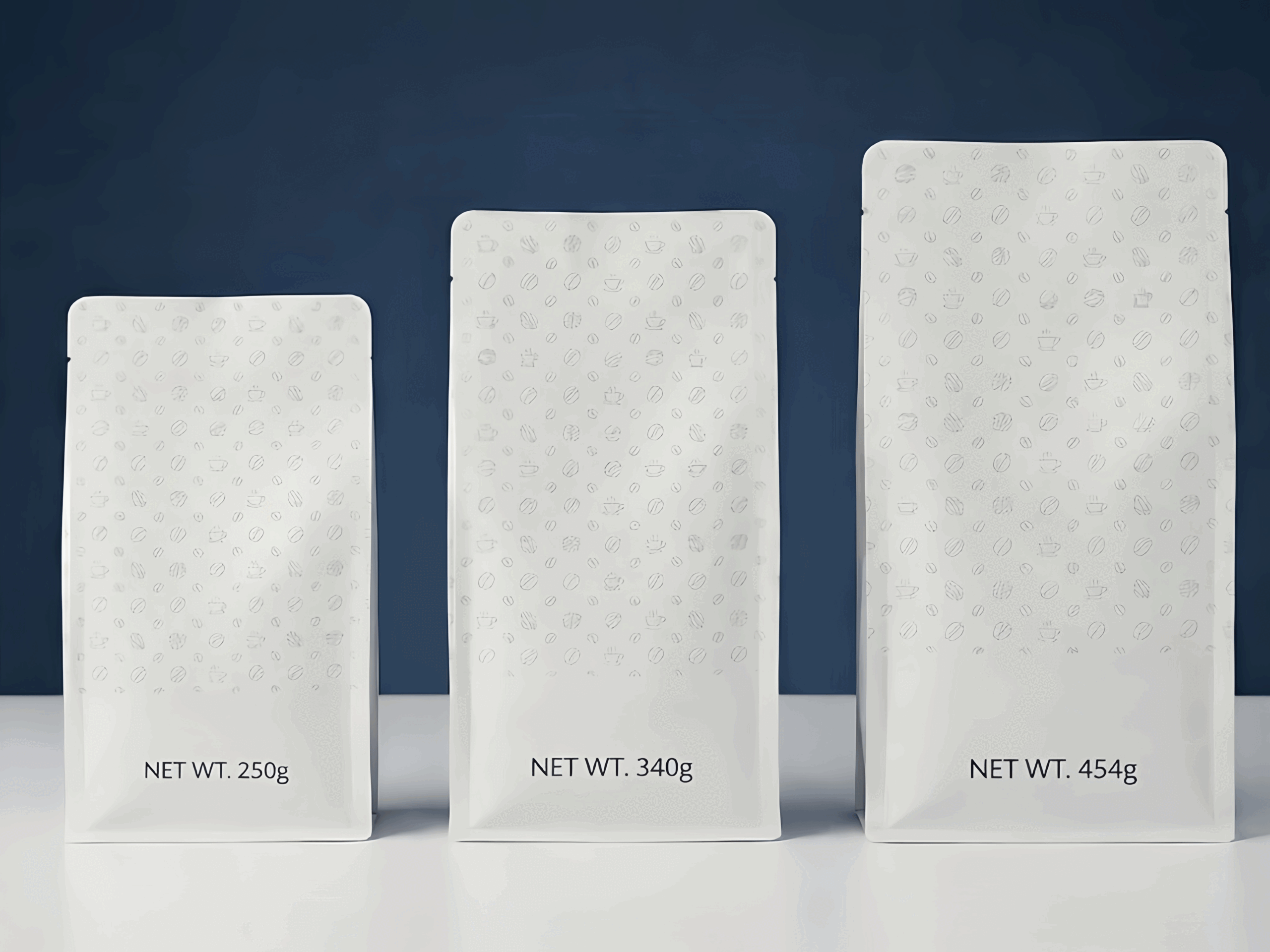
Most roasteries need one “default” bag for whole-bean or ground retail sales. This is usually the size that appears in most online listings and on shelves. In many markets, common choices for this main size include:
- around 250 g
- around 300–340 g
- around 454 g (1 lb)
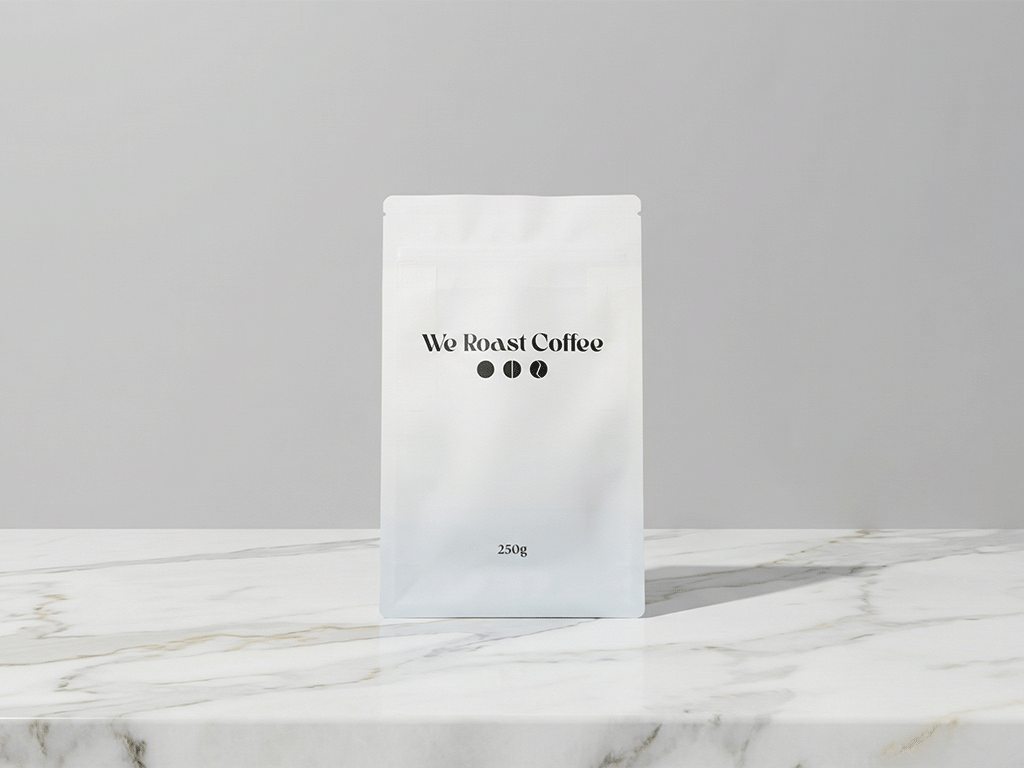
A smaller main size such as 250 g often suits people who drink one or two cups per day. The bag empties within a reasonable time, which helps with freshness. It also keeps the price per bag at a level that feels less risky for new customers who want to try your coffee.
A larger main size such as 340 g or 1 lb tends to work better for households that brew more often or share coffee. These buyers may focus on value per gram and prefer fewer orders. For them, a slightly larger bag can make sense.
From a packaging point of view, the main retail size should fit your roast batch sizes, your grinder loss, and your actual fill weight. The coffee bag needs enough space for the coffee and a small headspace above the valve and zipper, but not so much empty room that it looks half full. It is usually better to choose one main size and keep it consistent over time, then adjust price and messaging around that size.
Smaller and larger coffee bag sizes in practice
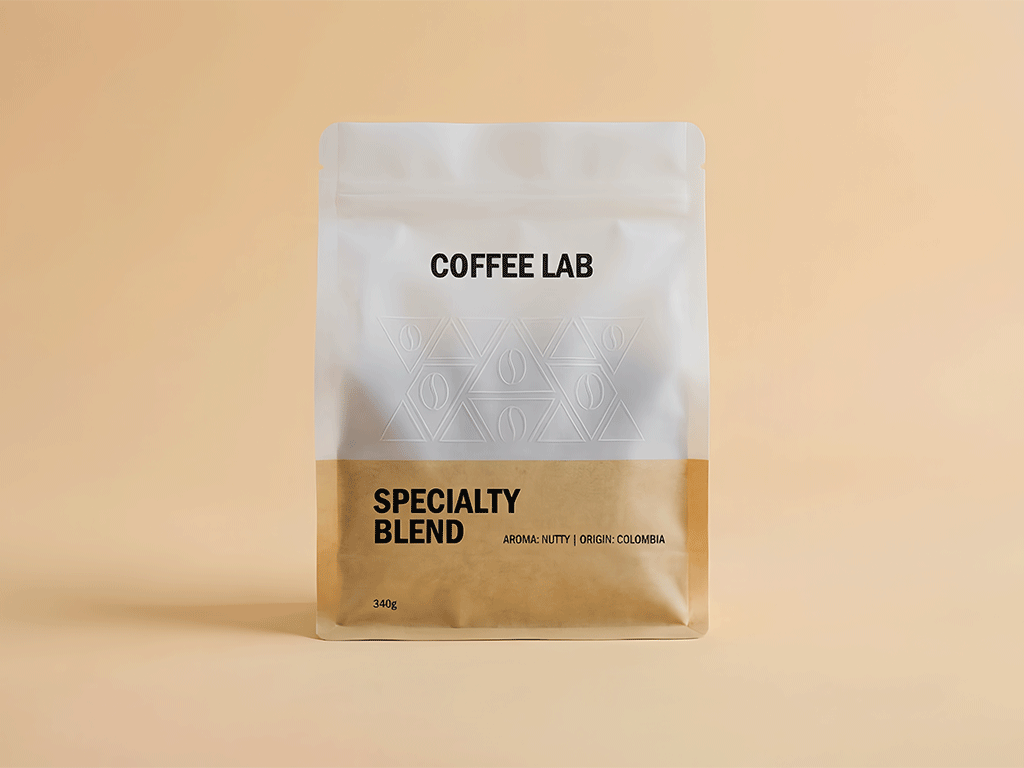
Besides your main retail bag, many roasteries use a mix of smaller and larger formats. These extra sizes support trial, gifting, and trade customers, but each one should exist for a clear reason, not just to copy what others do.
Smaller bags for trial and gifting
Smaller bags usually appear in first-time offers, gift bundles, or high-priced lots where a full-size bag feels like too much risk. A typical small retail bag holds around 80–125 g. That is enough for several brews at home, so buyers can form a real opinion of the coffee. At the same time, the lower volume keeps the entry cost down and makes it easier to build tasting sets with two or three coffees in one pack.
Some roasteries also use small bags for education by grouping three origins or three processes in one set. In that case, the coffee bag size serves tasting and comparison rather than daily drinking. If you add a small format, details still matter: labels and key text must stay readable, the base or hang hole must keep the bag stable, and filling and sealing should work on the same line as your main size with only minor adjustments.
Larger formats for heavy use and trade
Larger bags usually serve heavy home users, offices, and trade partners. Common choices are 500 g and 1 kg. A 500 g bag often suits frequent home brewers who still want a size that fits easily in a cupboard. A 1 kg coffee bag leans more toward professional use and often matches grinder hoppers and stock routines in small service settings.
For trade customers, size and structure should support consistent dosing, simple storage, and clear stock rotation. A trade-focused bag may use a plainer layout with larger text for roast date and blend name, plus a stronger base and seams for repeated handling. In this channel, it is usually safer to keep one or two standard larger formats and use them across the range, instead of changing sizes often.
Keeping your coffee bag sizes manageable
Offering many coffee bag sizes can look flexible, but every new format adds work. Each size needs its own bags or film, label layout, checks, and often its own machine settings. Over time, this extra variation slows packing and makes stock harder to manage.
Deciding how many sizes you really need
From a packaging and operations view, many small and mid-sized roasteries work more smoothly with a short list of volumes. A common pattern is one main retail size for whole-bean sales, one smaller size for trial, gifting, or special lots, and one larger size for heavy home use or trade buyers. This structure still allows different coffees and releases, but the physical formats stay stable. You change the coffee and the label more often than you change the coffee bag itself.
Before you add a new size, it helps to ask a few direct questions. Is there a clear use case that current sizes do not cover? Will this volume move fast enough to stay fresh? Can the packing team run this format without frequent mistakes or long changeovers? Honest answers usually show whether a new size is helpful or mainly a reaction to a few comments.
Linking size choices to packaging and equipment limits
Once you decide which sizes to keep, you still need to match them to real packaging and equipment limits. Coffee bag dimensions and volume need to work together. Width, height, and gusset depth must fit your target fill weight and grind size. If a bag is too narrow or too low for the coffee you want to pack, filling becomes harder and the bag may not hold its shape well in storage or transit.
Machine setup is another key point. Semi-automatic and fully automatic lines often need new guides or forming parts when bag widths change. Frequent changeovers raise the chance of sealing errors and slow the line, so a compact set of bag sizes often fits daily work better than a long list of formats.
Valves, zippers, and materials also need to match the size and use case. Some zipper and valve designs work well on small retail bags but not as reliably on heavier wholesale formats. Paper-based structures and mono-material films can behave differently at 1 kg than at 250 g, especially around folds and corners.
Lead times and minimum order quantities for printed bags or film can further limit how many sizes make sense. Larger printed runs usually work best when they support a small set of stable formats. For very low-volume coffees, generic bags with applied labels are often more practical than custom-printed packaging.
Turning coffee bag sizes into a simple system
Choosing coffee bag sizes works best when you match a few clear formats to real drinking habits, channels, and packing limits. A focused size lineup usually supports freshness, cost control, and daily operations. Many overlapping options look flexible but are often hard to run.
At YamiPak Coffee, we see size planning as part of the whole packaging system. Our work with roasteries focuses on aligning volumes, bag structures, and practical print options with how coffee actually moves through roasting, packing, and sales. When roasters and packaging partners make these decisions together, bag sizes become a simple tool that supports the coffee and the people who brew it, instead of another source of complexity.
Key takeaways
-
Most roasteries work best with a small, focused set of coffee bag sizes rather than many overlapping options.
-
One clear main retail size helps simplify pricing, inventory planning, and daily packing work.
-
Smaller bags are useful for trial, gifting, and special releases, but only when they serve a clear purpose.
-
Larger formats suit heavy home users and trade customers when they match real usage and storage needs.
-
Bag size decisions should align with roast batches, packing equipment, and material limits, not just customer preference.
Share This Story, Choose Your Platform!

Chris Li
Chris Li is the Marketing Director at YamiPak coffee, with over 10 years of experience in packaging and printing. Passionate about sustainable solutions and innovative design, Chris helps brands create impactful packaging that leaves a lasting impression.