How to Accurately Translate Roast Profiles Between Roasters
A roast profile that works perfectly on one machine can produce very different flavors on another. Many roasters struggle when they switch equipment, scale production, or add a new roaster.
To accurately translate roast profiles between roasters, you need to focus on heat transfer, drum speed, airflow, charge temperature, finish temperature, machine size, and roasting technology. Matching key roast events, validating results through blind tasting, and making small adjustments help maintain flavor consistency across different machines.
Even experienced coffee roasters find profile translation challenging. The same green coffee can behave differently on another machine, even when the target temperatures look similar. Understanding why this happens is the first step toward creating consistent coffee and protecting the flavor experience customers expect.
Key Variables That Affect Roast Profile Translation
When translating roast profiles, many roasters focus on temperature numbers first. This can cause problems because temperatures do not mean the same thing on every machine. Different sensors, probe locations, and roasting systems can create different readings.
Drum speed is one of the most important variables. A faster drum speed changes bean movement and heat exposure. A slower speed increases bean contact with the drum surface. This affects roast development and flavor balance.
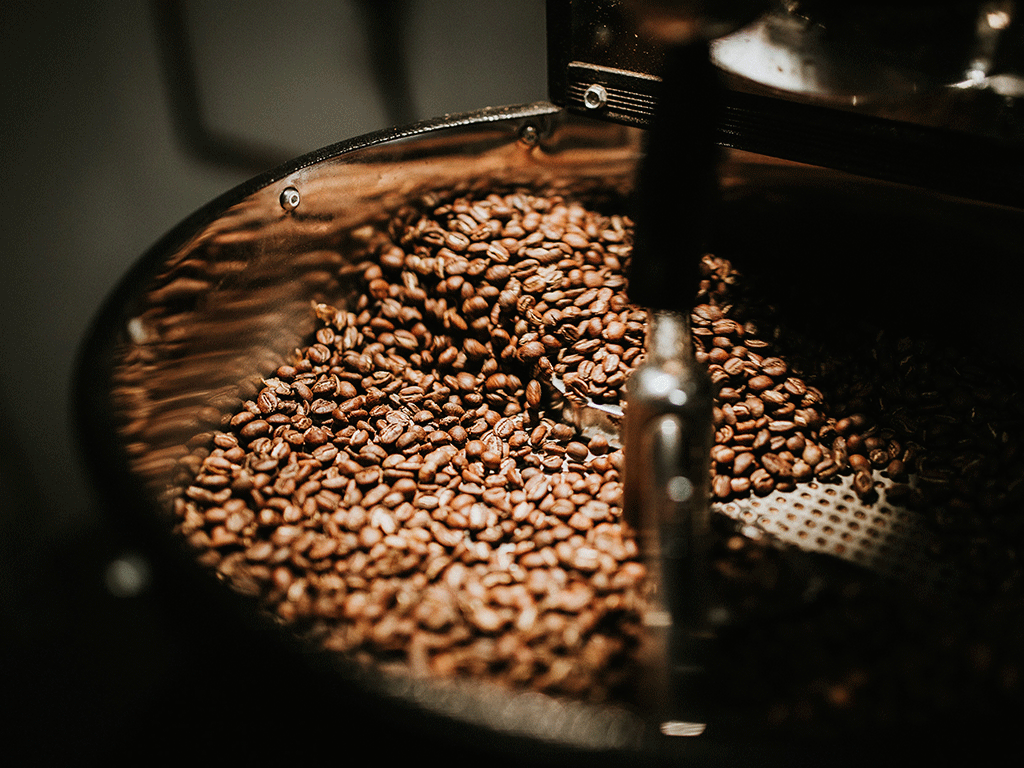
Heat transfer also plays a major role. Every roasting machine uses a mix of conduction, convection, and radiation. Drum roasters usually rely more on conduction. Fluid bed systems rely heavily on convection. This difference changes how energy enters the coffee bean.
Charge temperature can influence the entire roast. A higher charge temperature may create faster momentum early in the roast. A lower charge temperature often creates a gentler start. Two machines can require different charge temperatures to reach similar results.
Finish temperature is another key factor. A finish temperature on one roaster may not create the same flavor on another. This is why many roasters focus on flavor outcomes instead of relying only on final bean temperature.
Airflow affects moisture removal, smoke control, and heat transfer. Small airflow changes can increase acidity, sweetness, or roast character. When translating roast profiles, airflow settings often need adjustment even when the roast time remains similar.
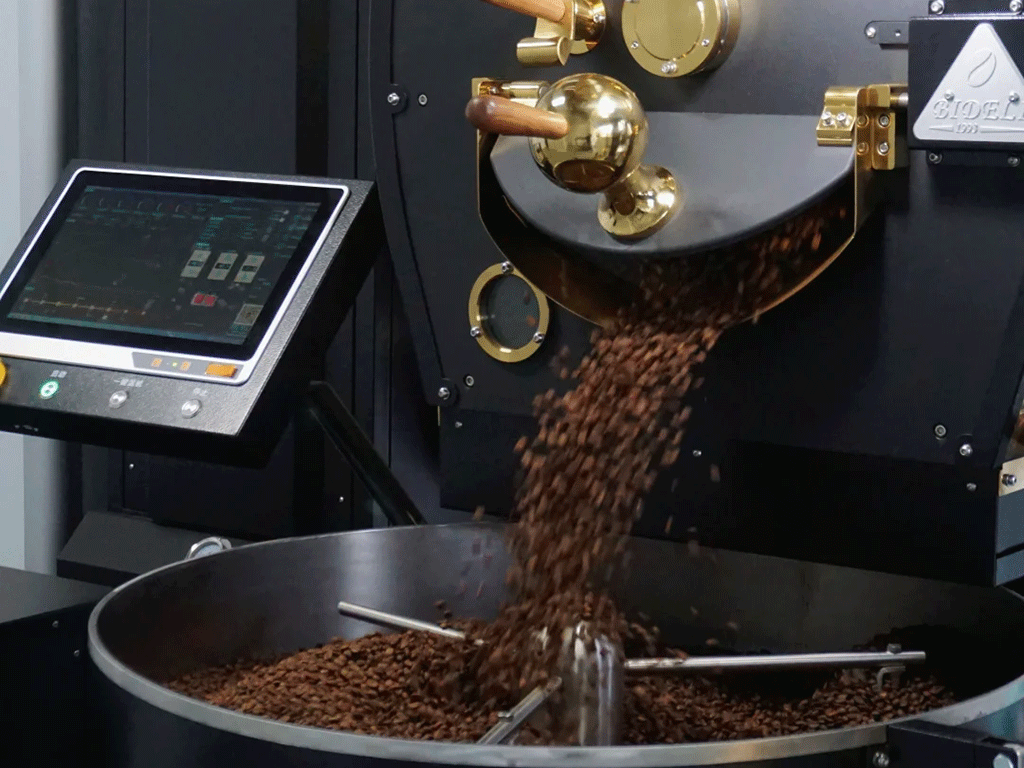
Machine design also matters. First crack may occur around 180°C on a Giesen W30, around 200°C on a Loring, and between 192°C and 198°C on a Samiac. Color change can happen anywhere from 130°C to 160°C. Changes in Rate of Rise can further alter flavor development. Understanding these variables creates a strong foundation for successful roast profile translation.
Methods for Translating Roast Profiles
A good translation process starts with creating clear reference points. Many roasters begin by identifying key milestones in the original roast profile rather than copying temperatures directly.
Color matching is often the first step. Roasters compare the roasted beans visually or use a color meter. This provides a measurable target before evaluating flavor. Color alone does not guarantee a perfect match, but it gives a useful starting point.
Time-based matching is another common method. Instead of focusing only on temperatures, roasters try to match major events such as color change, yellowing, first crack, and drop time. Similar timing often creates more comparable development.
The first crack stage deserves special attention. Because different machines report different temperatures, many roasters use first crack timing as a more reliable reference point. This helps maintain consistency between roast batches.
Rate of Rise trends can also guide profile translation. A similar RoR pattern often produces more consistent results than matching temperature numbers alone. Watching energy changes throughout the roast helps prevent underdevelopment or excessive roast character.
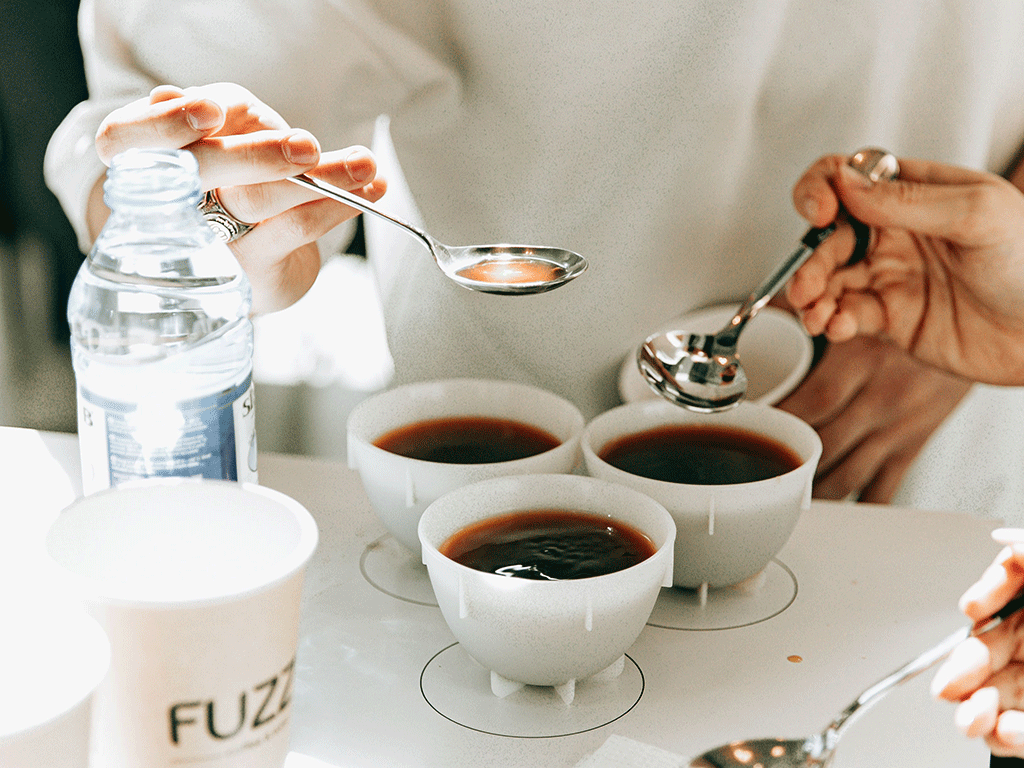
After producing a candidate roast, sensory testing becomes essential. Triangulation remains one of the most effective methods. In a standard triangle test, two cups contain one coffee and the third contains another. Tasters identify the odd cup without knowing which sample differs.
Many roasting teams prepare several triangle sets to improve accuracy. If tasters repeatedly identify the odd cup, the translated roast still differs from the original. If results become inconsistent, the flavor profiles are likely much closer.
By combining color matching, time references, RoR analysis, and triangulation, roasters can evaluate roast profiles scientifically instead of relying on guesswork. This process reduces risk and improves confidence when moving coffee production between different roasting machines.
Fine Tuning and Quality Control for Consistent Flavor
Translating roast profiles successfully requires more than one test roast, as fine tuning is often where the biggest improvements occur.
Blind tasting provides essential feedback: if a coffee tastes brighter than expected, extending development time may be necessary, while excessive bitterness can often be corrected by reducing development or adjusting heat application.
Airflow adjustments are another key factor when matching profiles between roasters. Higher airflow typically produces a cleaner cup with lighter body, whereas lower airflow can increase sweetness and body but may introduce smoky notes if overly restricted.
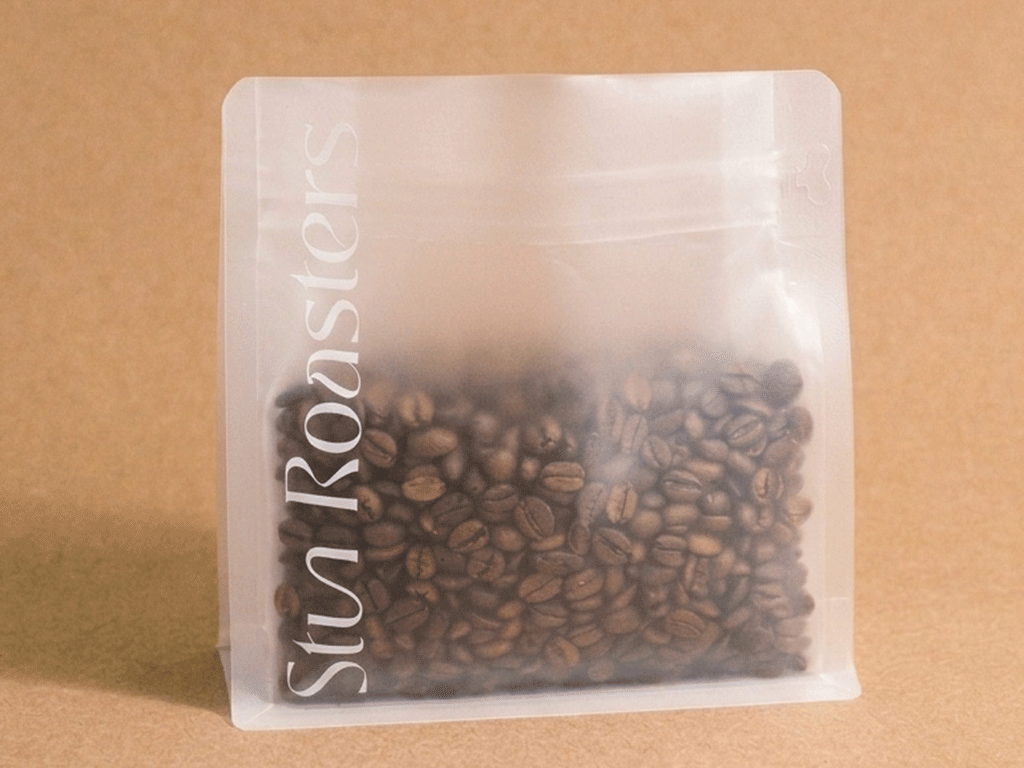
Charge temperature also plays an important role. Lower charge temperatures reduce the risk of scorching and uneven development, while higher charge temperatures help maintain energy momentum, especially when translating profiles to larger roasting systems.
Visual inspection remains a valuable quality control method. Uneven color, tipping, scorching, or baked characteristics often indicate issues in heat transfer. Combining visual assessment with cupping results helps roasters identify problems that may not be detected through tasting alone.
Maintaining detailed roast logs significantly improves consistency over time. Recording drum speed, airflow, charge temperature, first crack timing, development time, and drop temperature creates a reliable reference system for reproducing profiles across different machines.
Many roasting teams also develop machine-specific SOPs that document how each roaster behaves and define target reference points, reducing variability when staff or production scale changes.
Even after achieving a close match, ongoing quality control is still necessary. Variations in green coffee, seasonal changes, and equipment wear can all affect results. Differences in final bean temperature of around ±5°C may still produce nearly identical cup profiles. The objective is not perfect numerical alignment, but consistent flavor that customers cannot distinguish from the original roast.
At YamiPak Coffee, we provide 100% recyclable coffee packaging designed to preserve aroma, freshness, and flavor stability, ensuring coffee reaches customers as intended. Our range includes kraft paper, rice paper, and multilayer LDPE with PLA lining, supported by digital printing, flexible order quantities, fast turnaround, and low MOQs.
For more information on custom coffee packaging, contact our team today.
Share This Story, Choose Your Platform!

Chris Li
Chris Li is the Marketing Director at YamiPak coffee, with over 10 years of experience in packaging and printing. Passionate about sustainable solutions and innovative design, Chris helps brands create impactful packaging that leaves a lasting impression.